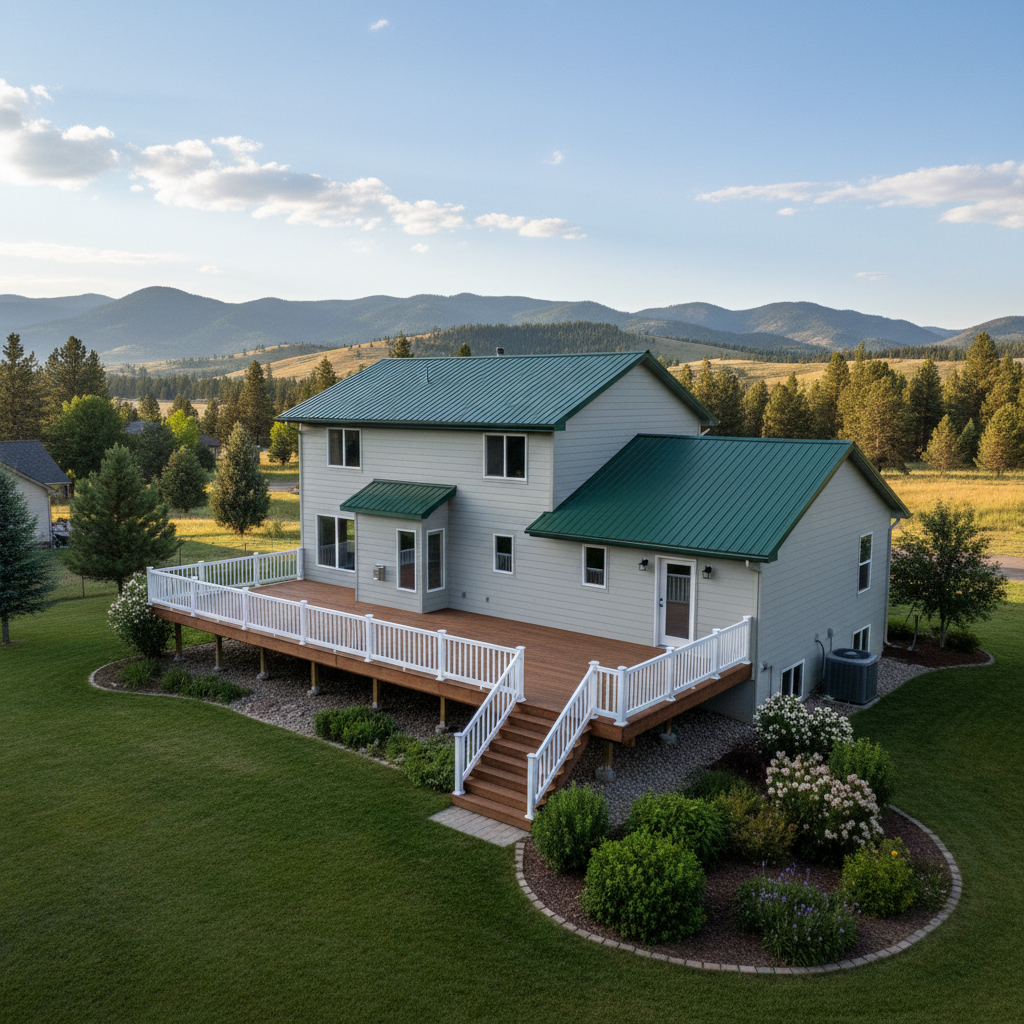
You are probably dreaming of a new Deck Construction project. Maybe you want a place to grill out with friends. Or maybe you want a quiet place to enjoy morning coffee with a view of the Bitterroot Mountains. That is a great vision. We help Missoula homeowners bring this vision to life all the time. Building a Deck Construction project here in Missoula is not like building one just anywhere. Our corner of Montana gives us some unique challenges. If your builder does not know how to handle these challenges, you will have problems down the road with your Missoula Deck Construction project.
Why Missoula's Climate and Terrain Matter for Your Deck Construction Project
You know how our weather is in Missoula. We get scorching hot, dry summers. Then we go straight into cold, snowy winters. That is a lot for any outdoor structure to handle. This constant swing, what we call freeze-thaw cycles, can really beat up a Deck Construction project if it is not built right. Wood will shrink and dry out in the heat. This makes it more absorbent to rain and liquids. This then causes swelling and buckling. This cycle can warp boards as well as pull nails out of joints. If you have a Deck Construction project in the University District, for example, you have probably seen how quickly an improperly built one can show wear and tear in Missoula.
Then there is the ground itself here in Missoula. Missoula's soil is not all the same. We have everything from riverbed sediment near the Clark Fork. We also have clay-rich soils in areas like Grant Creek. Clay soils, especially, can expand when wet as well as contract when dry. This means your Deck Construction project footings need to be designed to handle that movement. If your footings are not deep enough or properly installed to account for these local soil characteristics and our frost line, you are looking at potential settling or upheaval. That is a common issue for less experienced builders around here in Missoula.
Common Deck Construction Projects We Tackle in Missoula
We see a wide range of Deck Construction projects in Missoula. A few types pop up consistently because they make sense for how we live here:
- Ground-Level Deck Construction: A lot of folks want to expand their outdoor living space without a big elevation. These are great for relaxing as well as entertaining. They are also good for just creating an accessible area in your backyard. We often build these as patio extensions to existing outdoor areas in Missoula.
- Multi-Level Deck Construction: If you have a sloped yard, especially in some of the residential neighborhoods with varied terrain, a multi-level Deck Construction project can really maximize your usable space. This also creates distinct zones for different activities.
- Wraparound Deck Construction: These are fantastic for established properties. You can enhance curb appeal as well as get expansive outdoor functionality. Imagine wrapping around your home. You can take in different views throughout the day.
- Covered or Screened-in Deck Construction: We have intense summer sun as well as the occasional bug. A covered or screened-in area is a key feature. It lets you enjoy the fresh air without the direct sun or those pesky mosquitoes. This is especially true if you are near the river in Missoula.
Why Local Expertise Is Important for Your Missoula Deck Construction Project
Anyone can swing a hammer. Building a Deck Construction project that lasts in Missoula takes specific knowledge. It is not just about following a blueprint. It is about understanding the nuances of our environment.
Navigating Permits and Codes for Missoula Deck Construction
First off, permits are important. You will almost certainly need one for a new Deck Construction project from the City or County. This depends on your exact location in Missoula. There are some exemptions for small, unattached decks. Most practical residential Deck Construction projects will require a permit. We deal with these regulations every day. We know the drill. Missoula County, for instance, has adopted the 2021 International Residential Code (IRC) as well as other codes. We make sure your Deck Construction project is compliant. This way you do not run into headaches later.
Material Choices for Montana Deck Construction
The materials you choose make a huge difference for your Deck Construction project. Pressure-treated lumber is common. Composite decking like Trex is super popular here for a reason. It resists rot as well as insects as well as fading as well as those harsh temperature swings. It is engineered to handle our freeze-thaw cycles without cracking or splintering. It also stands up to heavy snow loads. Composite means less scrubbing. This also means more time enjoying your Deck Construction project. This is what we all want. If you do go with wood for your Deck Construction project, we will recommend options like cedar for its natural resistance. We will also recommend pressure-treated pine. We will talk about proper sealing to protect it from our dry summers and snowy winters.
Foundations That Hold Up for Missoula Deck Construction
I mentioned the soil and frost line earlier. It is worth repeating that proper foundation work is important. Our freeze-thaw cycles demand solid footing depths as well as proper drainage. This prevents frost heave. We are talking about digging below the frost line. This is typically 36 to 48 inches deep in Western Montana. This prevents the ground from pushing your Deck Construction project around. We also consider solutions like helical piers. These can be installed in most soil conditions. They are designed to maintain stability during freeze-thaw cycles.
Ultimately, a Deck Construction project is not just an add-on. It is an extension of your home as well as your lifestyle here in Missoula. You want it built right. You want it built to last. You also want it built by someone who understands what it takes to stand up to a Montana winter as well as a Montana summer. That is what we do at Missoula Deck Construction. We are not just building decks. We are building outdoor spaces you will love for decades.